La Sirène ou La Joueuse de flûte
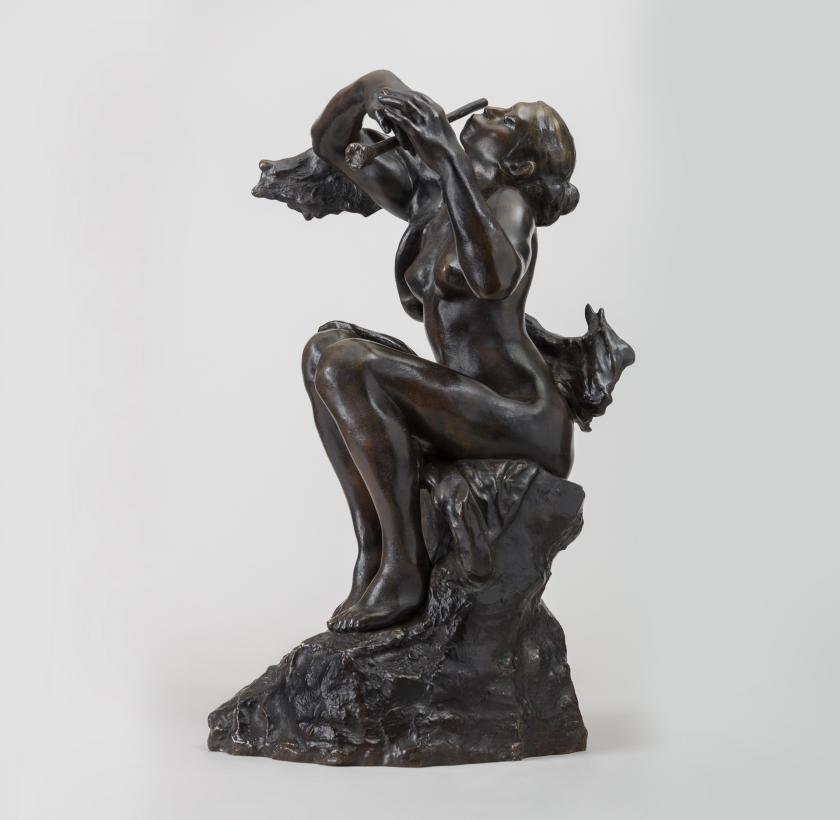
La Sirène ou La Joueuse de flûte
Fonte Eugène Blot, 1905
Camille Claudel a réalisé La Sirène ou La Joueuse de flûte vers 1904-1905. Le fondeur Eugène Blot a acquis le plâtre pour éditer six exemplaires en bronze. C’est l’un de ces exemplaires qu’il est possible d’admirer au musée Camille Claudel.
Une jeune femme d’une grande sensualité, le dos cambré, l’importance des hanches accentuée par des jambes accolées, est assise sur un rocher. Sa main droite effleure une flûte. La tête relevée, la femme approche sa bouche de son instrument mais ne le touche pas. Le souffle semble s’échapper de ses lèvres, laissant imaginer une musique envoûtante. La légèreté des draperies, dans le style Art nouveau, les doigts au fin modelé, accompagnent le mouvement des bras, dans une envolée musicale.
La sculptrice a évoqué cette œuvre dans plusieurs lettres adressées à Eugène Blot. Dans la première lettre, elle propose de lui vendre « une petite faunesse ». Ensuite, dans une autre lettre, elle lui fait part d’une idée pour une version intégrant l’onyx : « Vous pouvez, si le cœur vous en dit, faire faire une de vos Sirènes avec un rocher en onyx vert (rappelant la mer) ; la flûte en métal brillant. ». Cette version a sans doute été envisagée par Eugène Blot, mais n’a jamais été réalisée.
De la faunesse ou de la sirène, créatures mythologiques, Camille Claudel ne retint pas les aspects monstrueux, mais le lien étroit de chacune à la musique et à la sensualité. La sculptrice n’a-t-elle pas insisté sur l’aspect dangereusement séducteur de la joueuse de flûte susceptible de charmer le visiteur ?
Voir aussi dans les collections :
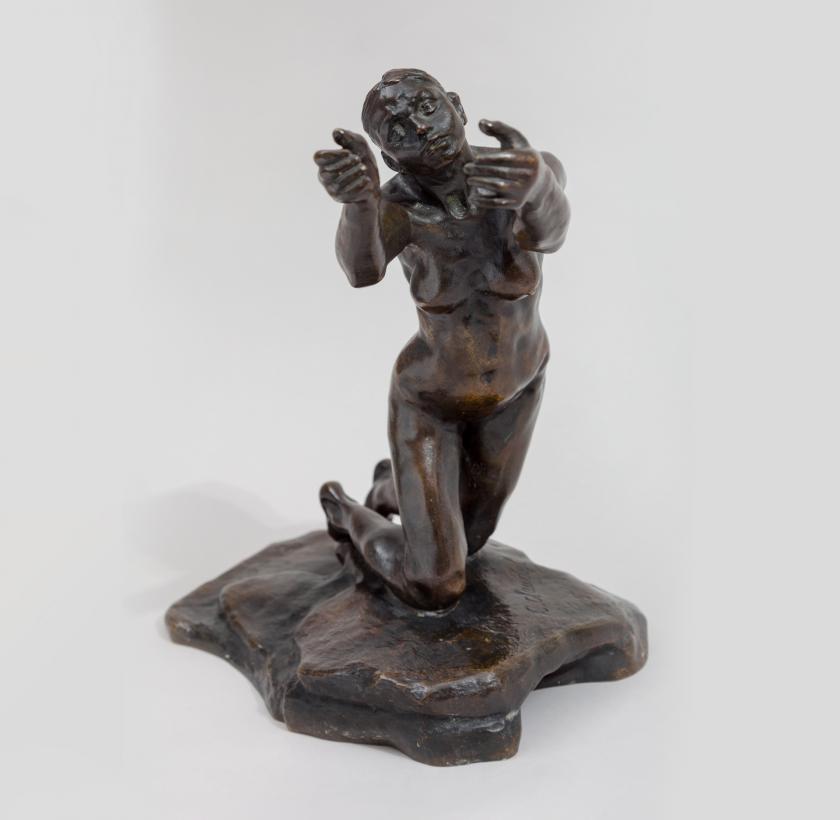
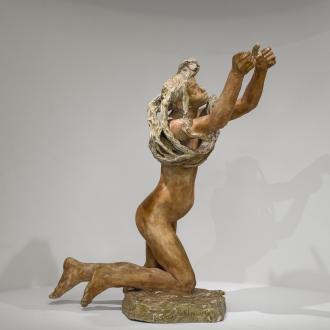
L'Implorante (grand modèle)
Voir aussi dans les collections :
Travaux en cours
Salle 11 fermée au public
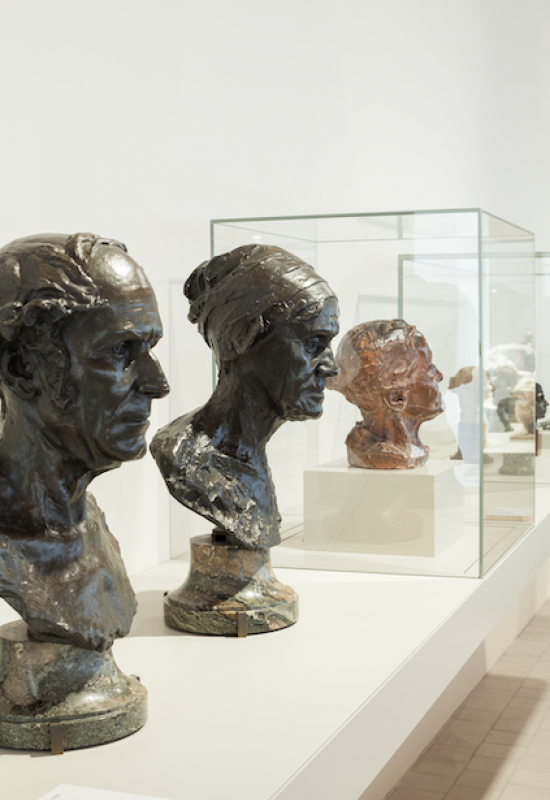
Des travaux sont en cours et la salle 11 est fermée au public.
Les œuvres de cette salle ont été déplacées dans les salles 10 et 12.
Nous vous prions de nous excuser pour la gêne occasionnée.
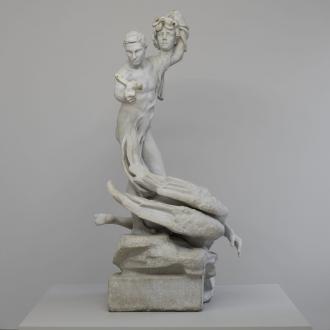
Persée et la Gorgone
Persée et la Gorgone
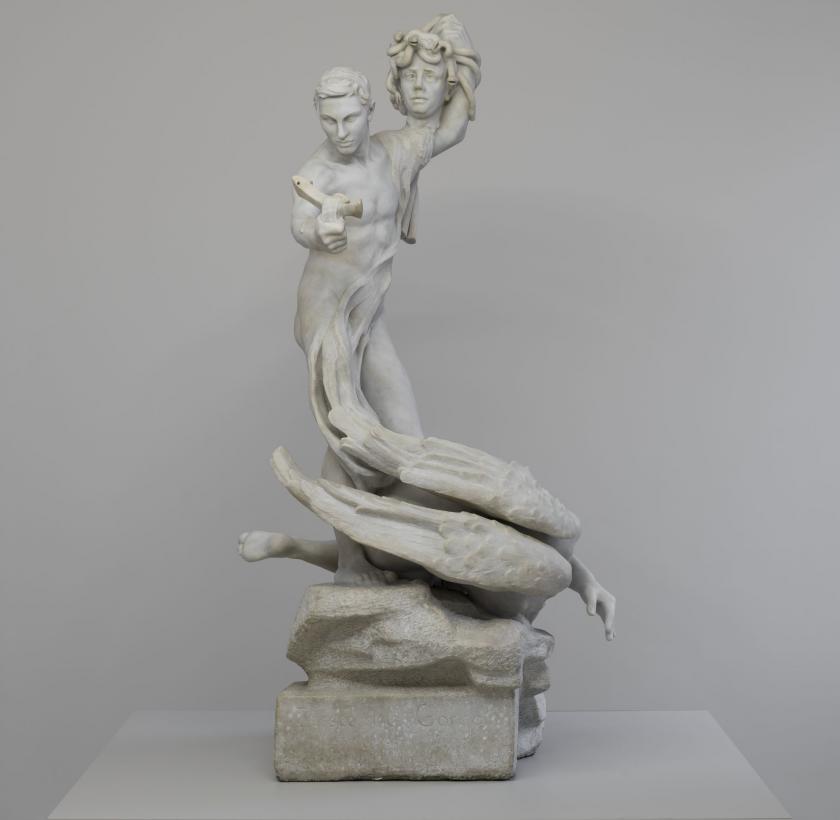
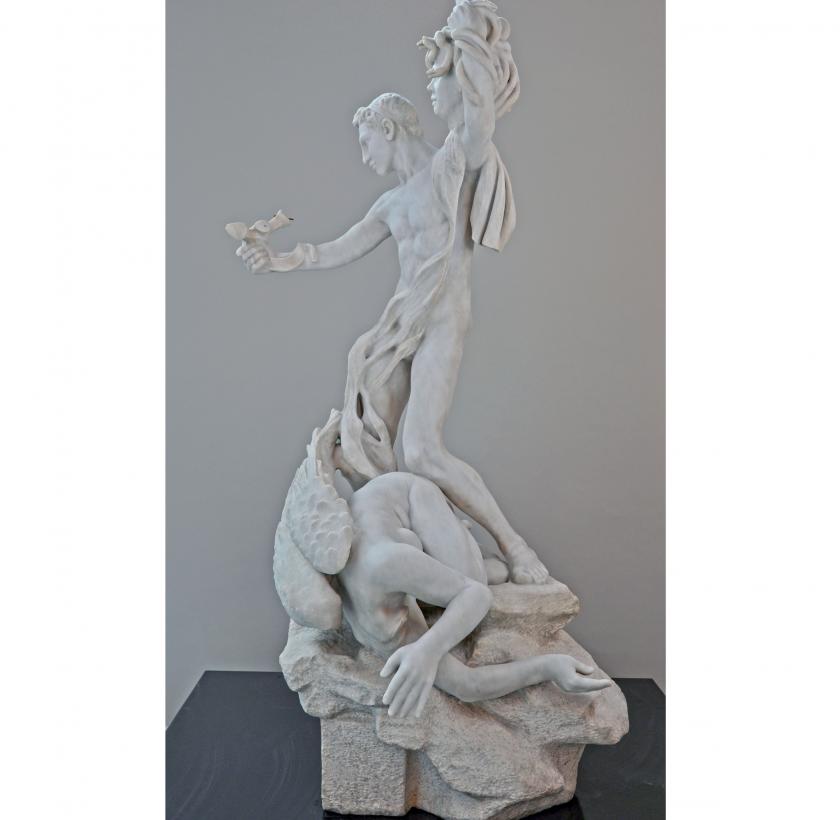
« C’est Médusa », « C’est Percy Jackson ! ». Dès qu’ils aperçoivent Persée et la Gorgone, sculpture en marbre de Camille Claudel, les enfants sont heureux de reconnaître le sujet de l’œuvre grâce à une série de romans qui leur est destinée.
Cette version achevée en 1902 est le seul marbre monumental de Camille Claudel. Commandée par la comtesse de Maigret, mécène de l’artiste, la taille du marbre a été confiée à François Pompon, d’après le modèle en plâtre exposé au Salon du Champ-de-Mars en 1899.
La mythologie grecque en est bien la source d’inspiration. Athéna transforma les trois sœurs Gorgones en monstres par vengeance. Leurs chevelures qui les rendaient autrefois irrésistibles auprès de leurs prétendants furent remplacées par des serpents et la déesse les affubla d’ailes d’or. Elles avaient également le pouvoir de pétrifier tous ceux qui croisaient leur regard. Persée réussit toutefois l’exploit de trancher la tête de Méduse, seule mortelle des trois Gorgones, en utilisant son bouclier poli en guise de miroir, pour la voir sans la regarder.
Persée est triomphant. Les serpents s’enroulent autour du bras du héros victorieux brandissant la tête. Des entrelacements figurant du sang s’échappent du cou de la Gorgone et se mêlent à un drapé, dirigeant le regard du visiteur jusqu’au corps sans tête de Méduse, qui gît, recroquevillé. Dans sa main droite, Persée tenait un bouclier, qui a aujourd’hui disparu. Le sujet de la sculpture est aisément identifiable : Camille Claudel montre à la fois la joie du vainqueur et sa lutte récente contre la créature. Quant aux postures des personnages, l’artiste les a reprises de deux de ses œuvres antérieures, La Valse et la Femme accroupie. À qui donc le visage de la Gorgone a-t-il emprunté ses traits ? Paul Claudel écrit en 1951 dans Ma sœur Camille : « Ce visage au bout de ce bras levé, oui, il me semble bien en reconnaître les traits décomposés. » ; sans le dire explicitement, l’écrivain sous-entend que sa sœur se serait représentée.
Entreprises mécènes : EDF, Crédit Agricole de Champagne-Bourgogne, Saipol et Diester industrie, SCS Sorodi, Groupe Soufflet, Nature d'origine, POK, Gaget, A.N.A.U. architectes, SIABA, Larbaletier, Lenoir et associés architectes, ACMM, Imprimerie La Renaissance, Emin Leydier, Prieur et associés.


Voir aussi dans les collections :
L'Âge mûr
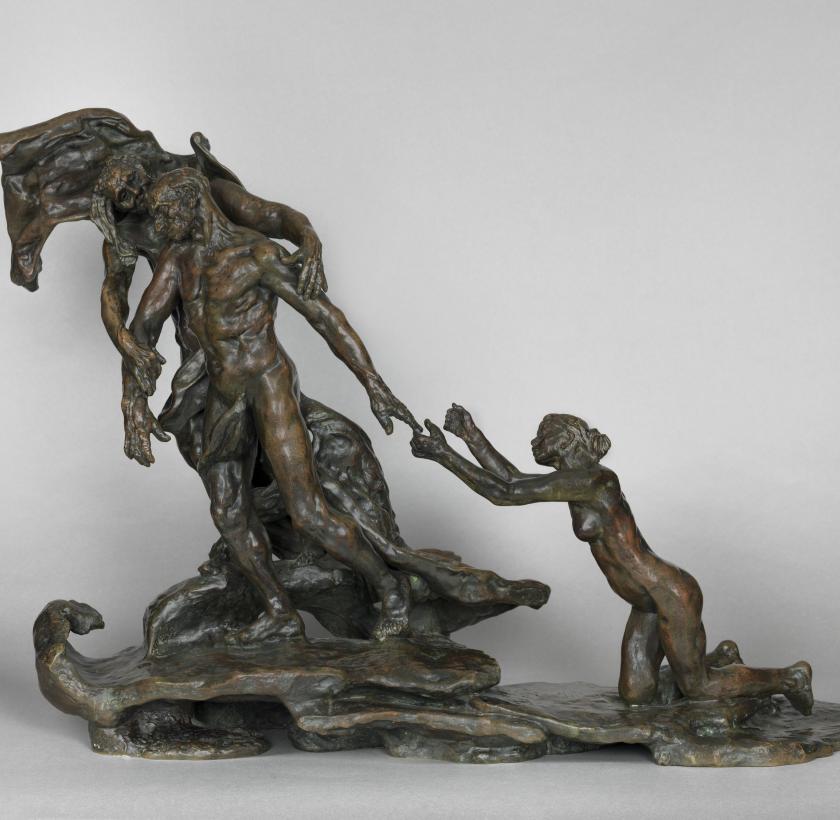
L'Âge mûr
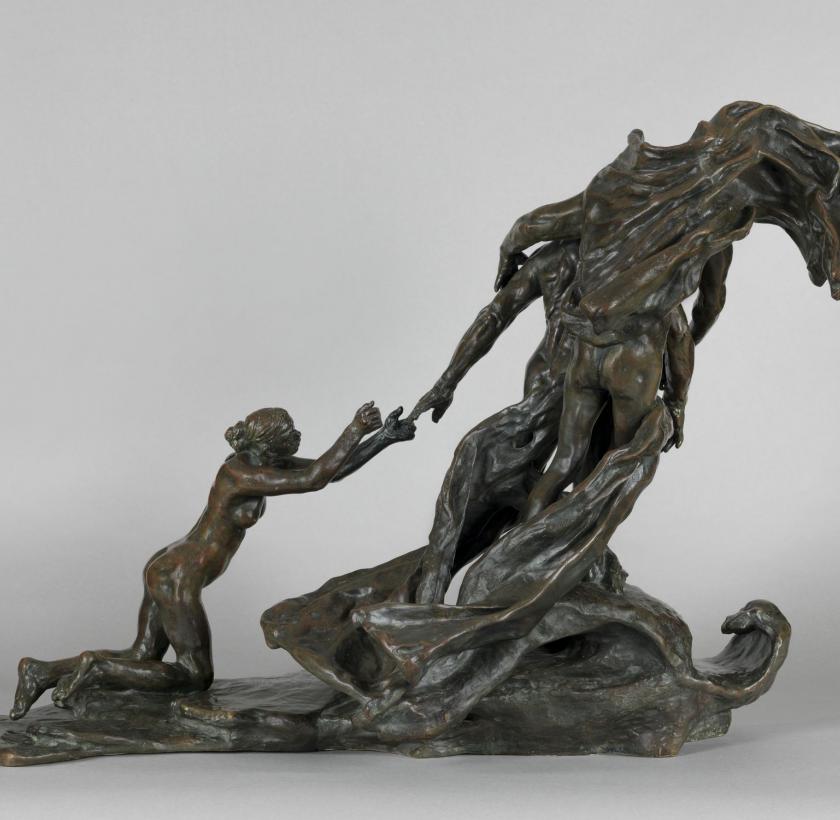
Fonte Eugène Blot, n°3, 1907
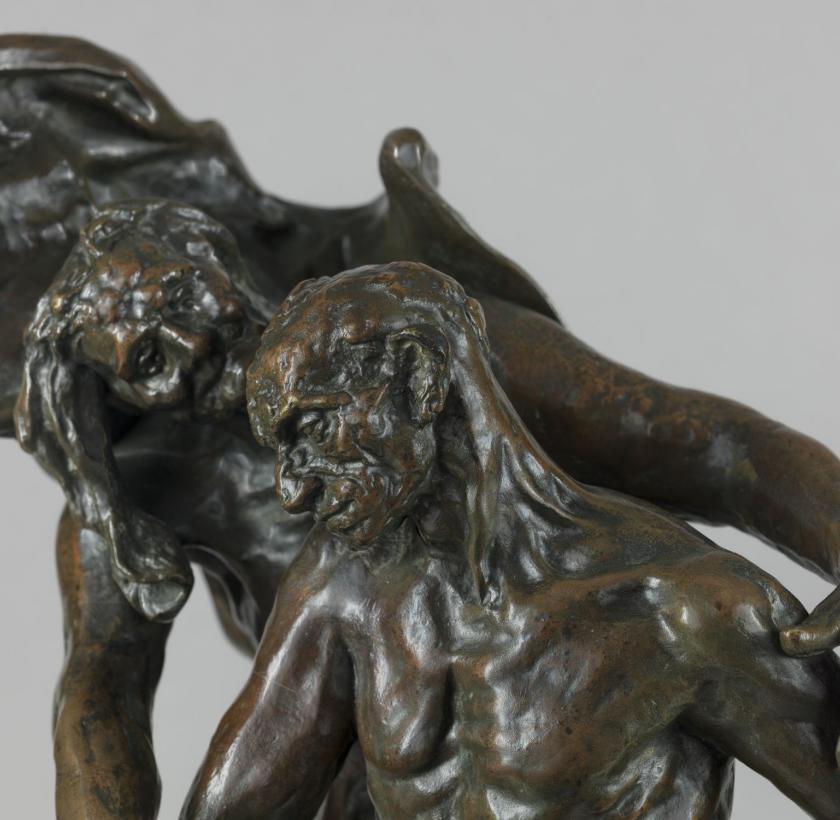
Avec L’Âge mûr, Camille Claudel montre sa maîtrise artistique et sa créativité, parvenues à maturité. L’artiste traite ici du temps qui passe, de la vieillesse et de la mort, sujets chers aux symbolistes. La composition parfaitement maîtrisée traduit la fuite inexorable du temps : une diagonale relie le corps de la jeune femme suppliante à la main tendue de l’homme et à la draperie de la vieille femme. Les différents niveaux de la terrasse accentuent encore cette marche dont l’issue ne peut être que la mort. L’artiste excelle ici à représenter plusieurs moments d’une même histoire : la jeune femme montre douleur puis résignation, l’homme tente de résister mais déjà se laisse entrainer. Surtout, Claudel joue avec les vides, qui font partie intégrante de l’œuvre : l’espace entre les mains de l’homme et de la femme exprime à lui seul toute la tension émotionnelle de ce moment.
Évoqué dès 1890 dans une lettre de l’artiste, L’Âge mûr connaît une longue genèse et est exposé pour la première fois au public en 1899. Après plus de dix ans d’échanges et de tractations entre Camille Claudel et l’État, la commande publique en marbre ou en bronze de cette œuvre ne voit finalement jamais le jour. Mais un collectionneur privé, le capitaine Tissier, commande L’Âge mûr en bronze, qui est fondu en 1902. Puis, à partir de 1907, Eugène Blot, galeriste, éditeur et fidèle soutien de la sculptrice, commercialise une réduction en bronze de ce groupe.
On a souvent réduit cette œuvre à sa dimension autobiographique. Mais si la sculpture fait écho à sa séparation d'Auguste Rodin, Camille Claudel y évoque avant tout la destinée humaine : cette allégorie des âges de la vie, montrant le passage de la jeunesse à l’âge mûr puis à la vieillesse, revêt une portée universelle. Surtout, la sculptrice affirme son autonomie artistique, par une expressivité, un traitement de l’espace et une vie intérieure des personnages qui n’appartiennent qu’à elle.


Le Musée caché 2023
Exposition de photographies en plein air
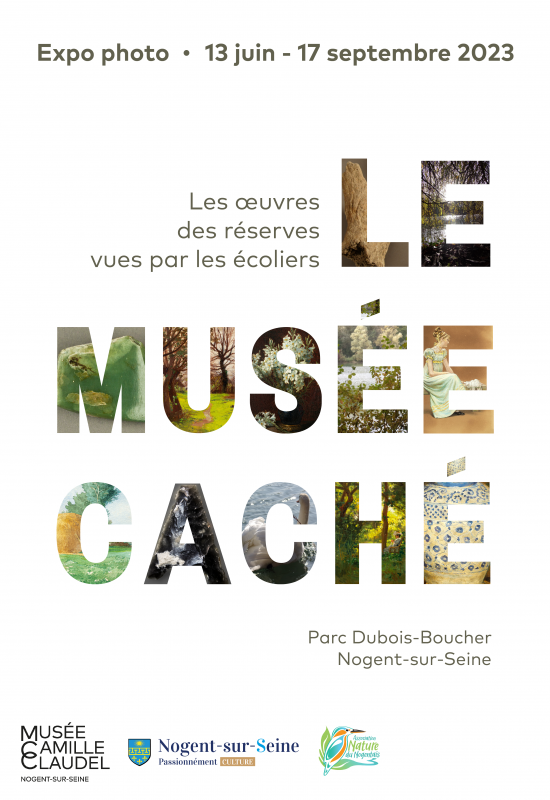
Since September 2022, Nogent-sur-Seine school children have been participating in an ambitious artistic project with the Nature Association of Nogentais and photographer Philippe Brame.
Nature is the common theme of the artworks and archaeological objects "hidden" in the selected reserves by the students. During sessions at the museum and outdoors, they were able to observe, understand, write about, and photograph nature, whether real or represented.
From this project, an exhibition of photographs was born, combining the students' snapshots with the museum's artworks: to be visited throughout the summer!
Des croquis d'après nature à Persée et la Gorgone
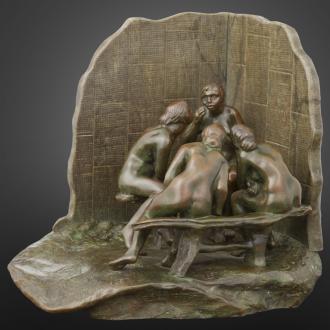
Dans les années 1890, exaspérée par les critiques qui rapprochaient sans cesse son travail de celui d’Auguste Rodin, Camille Claudel a recherché une esthétique résolument personnelle et moderne. Les Croquis d’après nature sont l’aboutissement de ses réflexions. Ces œuvres de petites dimensions représentent des scènes observées dans le quotidien. Ainsi, pour Les Causeuses, elle s’est inspirée d’un groupe de femmes dans un compartiment de train. Elle travaillait de mémoire et sans modèle, selon une méthode inhabituelle pour l’époque. Elle portait une attention particulière à la justesse et à l’expressivité de chaque personnage pour dépasser la dimension anecdotique au profit de l’universel. L’impression d’instantanéité, de mouvement et de vie qui se dégage de ces scènes est frappante. Malgré l’abondance des Croquis d’après nature mentionnés par les sources de l’époque, très peu nous sont parvenus. Certains ont probablement été détruits par l’artiste dans des moments de détresse.
Autour de La Valse
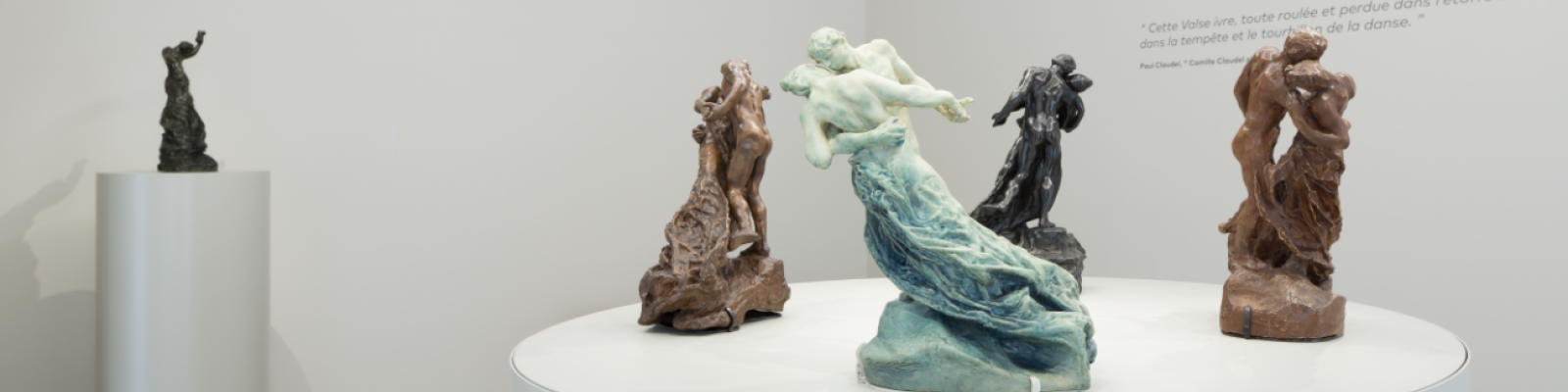
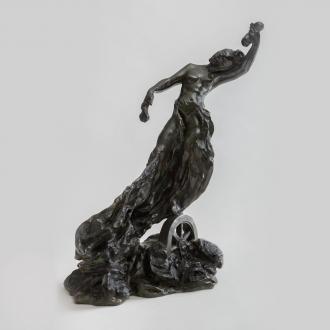
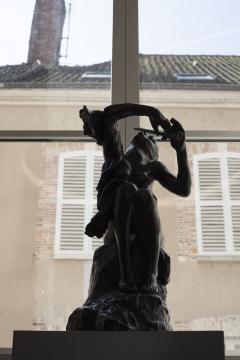
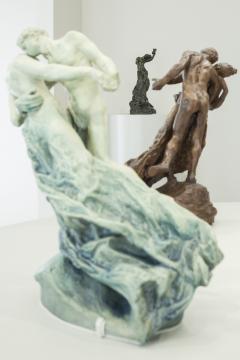
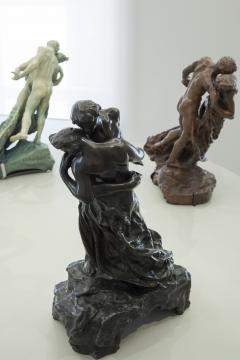
La Valse est une oeuvre emblématique de Camille Claudel qui a connu plusieurs variantes. Dans la première version, un grand format, les danseurs étaient entièrement nus. En 1892, l’artiste a sollicité la commande d’une traduction en marbre. Armand Dayot, l’inspecteur chargé d’examiner le groupe pour le ministère, a été impressionné par sa qualité, mais, pour des raisons esthétiques et morales, il a demandé à la sculptrice d’habiller ses figures. Camille Claudel a alors exécuté une deuxième version avec une draperie s’enroulant depuis les pieds des danseurs jusqu’au-dessus de leurs têtes. Malgré l’avis favorable d’Armand Dayot, la commande du marbre n’a jamais abouti et il ne subsiste de cette étape qu’un exemplaire en bronze. Les variantes présentées ici sont plus tardives. Il s’agit d’une troisième version, de plus petites dimensions et au drapé simplifié. Ces éditions ont été produites pour le commerce et chaque tirage diffère légèrement dans les matériaux choisis et l’assemblage des danseurs.

Paintings
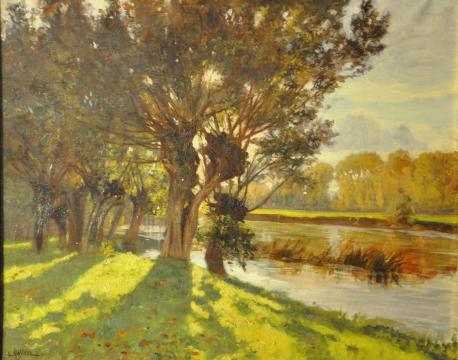
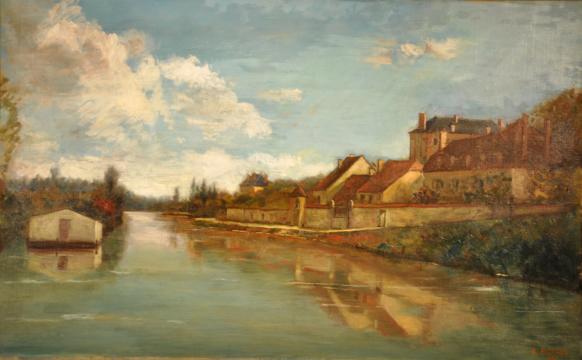
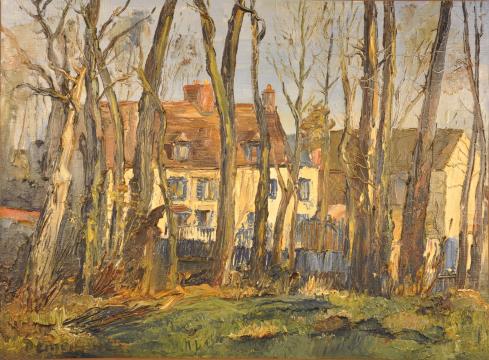
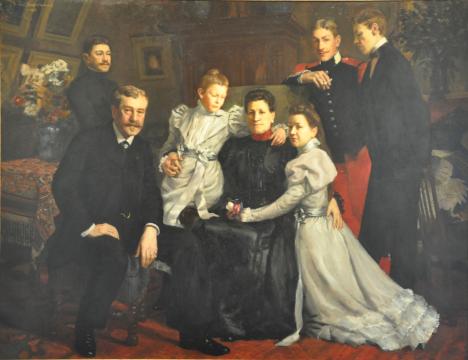
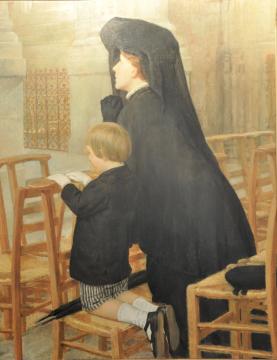
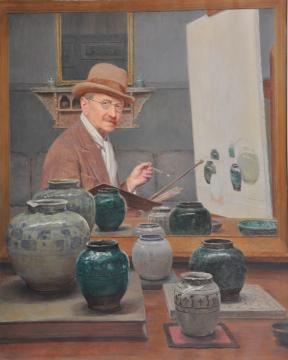
The Camille Claudel Museum is home to around 300 paintings. Ancient painting is represented by a small number of objects from different schools, which have been added to the collections through donations received by the museum.
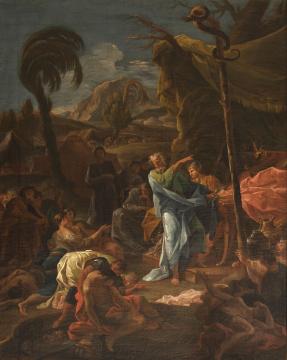
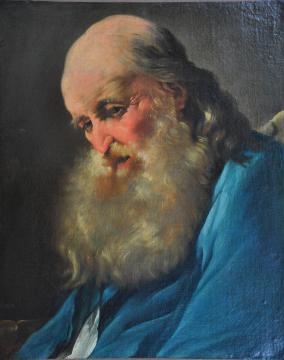
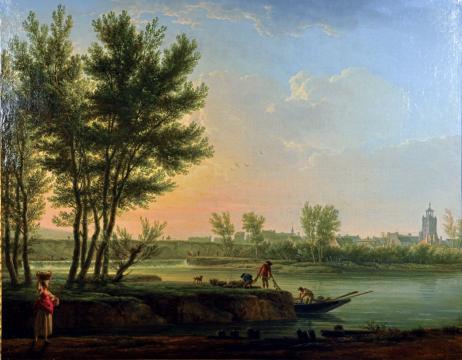
Some 18th century paintings from Alfred Boucher’s collection are remarkable, such as Le Serpent d’airain (The brazen serpent) by Corrado Giaquinto, Tête de vieillard by Noël Hallé or La Jeunesse de Turenne by Jean-Baptiste Le Prince. The Portrait of Claude Bouthillier de Chavigny (around 1643) and Le Livon by Joseph Vernet (1764) were acquired for their connections with the history of Nogent-sur-Seine and its surroundings.
The majority of the paintings date from the 19th or early 20th century. There are coherent sets of exhibits, such as the paintings by Léonce Vaÿsse donated by the artist, the paintings by Alfred Boucher acquired in conjunction with his sculptures and those by René Demeurisse donated by his daughter. Finally, the magnificent Emile Boeswillwald collection is a testimony to the roots of this family of architects and artists in Nogent, who owned a house in the commune. They mainly feature portraits and still life works.

Archaeological remains
At the beginning of the 20th century, collectors were captivated by archaeological remains, although they were usually nothing more than objects of curiosity. When the museum opened in Nogent-sur-Seine, several donors contributed a variety of artefacts to the collection, some of which disappeared during the Second World War. In 1962, André Lemoine founded the Groupe Archéologique du Nogentais (the Nogent Archaeological Group). This was a pivotal period for the emergence of archaeology as a scientific discipline and the excavations carried out by the GAN took advantage of the latest techniques, notably through aerial surveys. To preserve the discovered furniture, the GAN was granted a room in the former museum, which was closed to the public at the time. In return, they agreed to assist in the reopening of the museum, which finally took place in 1974. In 1978, a young archaeologist, Jacques Piette, was appointed curator. He undertook extensive excavations in the Nogent area up until the 1990s, and made substantial contributions to the museum’s collections. Approximately 9,000 artifacts or collections of artifacts are now preserved in the Camille Claudel Museum. Some remarkable sites include the tombs and dwellings at Les Grèves de Frécul (Neolithic), the funerary complex at Barbuise-La Saulsotte (Final Bronze Age), the Gallic sanctuary at La Villeneuve-au-Châtelot (Iron Age) and the pottery workshops excavated in the same commune (Gallo-Roman period).